
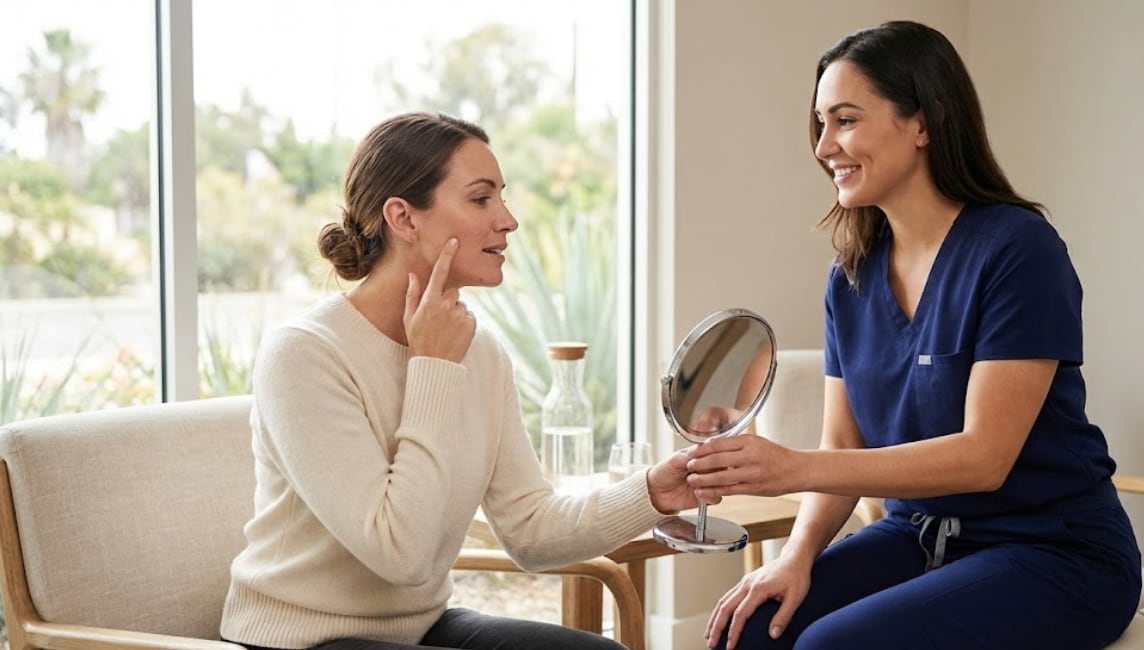
Who Is a Good Candidate for a Chemical Peel in Temecula?
Feeling unsure about your skin and constantly searching for a solution? If you are struggling with dull skin, sun damage, or acne scars, and feeling overwhelmed with all the options out there, you are not alone. Many of us find ourselves in a constant scroll trying to find the right treatment but feeling more confused with each click. It is frustrating, and sometimes, it feels like there is no clear answer.
We understand the stress and tension that can come with skin concerns. That is why you don’t need to keep scrolling aimlessly anymore. At LeVogue Med Spa, we have seen countless clients feeling the same way, and we are here to reassure you: It is okay. We have got you covered.
Take a moment to sit back, relax, and read through this guide. By the end, you will have all the answers you need to decide if a Chemical Peel in Temecula is the right step for your skin journey.
Key Takeaways
The Checklist: Signs that make you the perfect candidate.
The Process: How the treatment exfoliates and renews.
The Levels: Choosing between light, medium, and deep peels.
The Comparison: How peels stack up against other treatments.
What Are the Signs You Are a Good Candidate?
Are you struggling with skin that looks dull, uneven, or tired? Most healthy adults who want to improve the look and feel of their skin are good candidates. Specifically, you might be a perfect match if:
You have sun damage: Living in Southern California means intense UV exposure. If you have sunspots or uneven tone, this is for you.
You have acne scars: Light scarring and post-acne marks respond well to peeling.
Your skin feels "rough": If your texture feels bumpy or dry, a peel can smooth it out.
You want a "glow": Preparing for a wedding? A light peel gives a radiant look quickly.
Note: While peels are amazing, budget is always a factor. You can learn more about the cost of chemical peels to see which option fits your financial plan.

What Skin Concerns Can Chemical Peels Treat?
Chemical peels are versatile workhorses in the skincare world. They effectively treat:
Pigmentation: Melasma, sunspots, and freckles.
Aging: Fine lines around the eyes and mouth.
Acne: Active breakouts and the dark marks they leave behind.
Texture: Enlarged pores and rough patches.
How Do Chemical Peels Actually Work?
It is a process of "out with the old, in with the new." A specialized solution is applied to the skin to exfoliate the damaged outer layers. This controlled injury signals your body to speed up cell turnover and boost collagen production.
The result? The old, dull layer peels away, revealing fresh, baby-soft skin underneath.
Which Level of Peel Is Right for You?
Not all peels are the same. Understanding the depth helps you manage your expectations regarding results and recovery.
If you have very deep scars that a peel might not fully address, you might want to compare this treatment with our complete microneedling guide.
Who Should NOT Get a Chemical Peel?
While safe for most, peels aren't for everyone at every moment. You should wait or avoid this treatment if:
You have an active infection or open wound on your face.
You are currently pregnant or breastfeeding.
You have taken Accutane (isotretinoin) in the last 6 months.
You are prone to keloid scarring.
You cannot avoid the sun for at least a week after treatment.
Can Darker Skin Tones Get Chemical Peels?
Yes! There is a myth that chemical peels are unsafe for darker skin (Fitzpatrick types IV-VI). The truth is, they are safe if performed by an expert. At LeVogue Med Spa, we customize the solution to prevent hyperpigmentation, ensuring safe results for every skin tone.
How Does a Peel Compare to Other Treatments?
Choosing between treatments can be tricky. Here is a quick comparison:
Peels vs. Microneedling: Peels are better for surface tone and pigmentation. Microneedling is generally better for deep texture issues and collagen induction.
Peels vs. Botox: Peels fix the surface of the skin (texture/color). Botox fixes the muscle movement that causes wrinkles. They work great together!
Peels vs. Facials: A facial cleans and hydrates, but a chemical peel offers medical-grade exfoliation that produces longer-lasting changes.
How Should You Prepare for Your Appointment?

To get the best results in Temecula’s sunny climate, follow these pre-treatment rules:
No Tanning: Avoid direct sun or tanning beds for 2–4 weeks.
Pause Actives: Stop using retinol or harsh acids 5–7 days before.
Stay Hydrated: Drink plenty of water to help your skin heal.
What Is the Recovery Timeline?
Day 1–2: Skin feels tight and red, like a mild sunburn.
Day 3–5: Flaking begins. Do not pick at it! Let it shed naturally.
Day 6+: Fresh, brighter skin is revealed.
Why Choose LeVogue Med Spa for Your Chemical Peel?
When it comes to your face, you deserve a team that combines clinical precision with a luxury experience. Here is why Temecula residents trust us with their skin:
Holistic Expertise: We don’t just treat the surface; we understand skin anatomy to ensure long-term health.
Safety First: We provide detailed consultations to discuss your history and goals, ensuring you feel safe every step of the way.
Customized Plans: No cookie-cutter treatments here. Each peel is selected based on your specific skin type and concerns.
Advanced Techniques: As the fastest-growing med spa in Southern California, we use the latest methods to minimize downtime and maximize that glow.
No Downtime Options: We offer peels that let you return to your daily routine immediately, looking refreshed.
Frequently Asked Questions (FAQ)
Is a chemical peel painful?
Most patients feel a tingling or warming sensation, but it is rarely painful. We use cooling fans to keep you comfortable. According to the American Society of Plastic Surgeons, superficial peels rarely require anesthesia, though deeper peels might need some numbing.
How often should I get a peel?
For "glow" maintenance, you can get a light peel every month. For correcting specific issues like acne or pigment, a series of 3–6 peels spaced 4 weeks apart is standard.
Can I wear makeup after the treatment?
For a light peel, you can usually wear makeup the next day. For medium peels, you should wait until the peeling process is finished (about 5-7 days) to avoid irritating the new skin.
Will it make my skin thin?
No. Regular exfoliation actually stimulates the dermis (the deeper layer of skin) to thicken, making your skin stronger and more resilient over time. The Cleveland Clinic confirms that chemical peels improve skin texture by removing damaged outer layers, promoting healthier regrowth.
Is it safe for sensitive skin?
Yes, but we start with a very gentle enzyme or lactic acid peel. We always perform a skin analysis first to ensure your barrier is healthy enough for treatment.
Conclusion
Ready to stop scrolling and start glowing? If you see yourself in the descriptions above, you are likely a great candidate for this transformative treatment.
At LeVogue Med Spa, we combine clinical expertise with a pampering touch to ensure you get the best results safely. Schedule your consultation today to find out exactly which peel is perfect for your unique skin goals!