
What Is Dermaplaning? Facial Benefits, Risks and Cost
Dermaplaning is a facial treatment where a trained provider uses a sterile surgical blade to gently remove dead skin cells and fine facial hair, often called peach fuzz. It uses no needles or chemicals, and most people go straight back to their day. The result is smoother, brighter skin that holds makeup and skin care better. Dermaplaning does not stop aging, and the hair grows back the same as before. This guide explains how dermaplaning works, its benefits and side effects, and who should skip it. It also covers how often to go, how it compares with microdermabrasion and at-home razors, and what it costs.
How Does Dermaplaning Work?
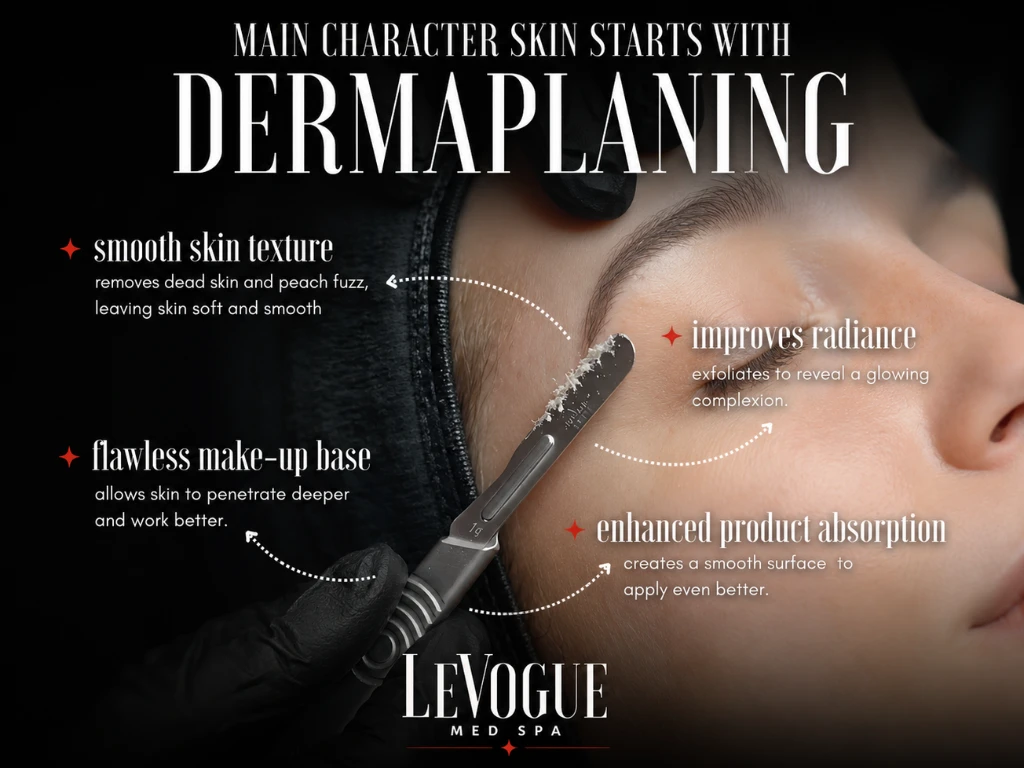
Dermaplaning works by lightly scraping away the top layer of dead skin and the soft hair that sits on it. A provider holds a small sterile blade at a low angle and moves it across clean, dry skin in short, gentle strokes.
The hair it removes is vellus hair. That is the short, soft, light hair that covers most of the face. Dead skin and vellus hair can make skin look dull and trap makeup and oil. Removing both reveals the smoother skin underneath.
The provider works on areas such as the cheeks, forehead, chin, jawline, and upper lip. They avoid the eyelids, the brows, and any raised moles or bumps. Dermaplaning is not a brow trim.
At LeVogue, dermaplaning is offered as an add-on to a hydrating facial, and it is already part of the top facial tier. You can see how it fits with the other hydrating facial tiers and add-ons before you book.
Dermaplaning is also different from dermabrasion. Dermabrasion is a deeper medical procedure for scars, with real healing time. Dermaplaning only treats the very top layer of skin.
What Are the Benefits of Dermaplaning?
Dermaplaning leaves skin smoother, brighter, and easier to care for, often after one session. Here is what many people notice.
Smoother texture: Dead skin is lifted away, so your face feels soft right after.
A brighter look: Without the dull top layer and fine fuzz, skin reflects light more evenly.
Easier makeup: Foundation and powder go on smoother and do not cling to peach fuzz.
Better skin care absorption: Serums and moisturizers reach fresh skin instead of sitting on dead cells.
No needles or suction: The treatment uses a blade only, which some people with sensitive skin prefer.
Quick and simple: It fits into a facial visit, and most people return to work or plans the same day.
Does Dermaplaning Make Your Face Look Younger?
Dermaplaning can make your skin look fresher, smoother, and more even, which many people see as a younger look. It does not stop aging, tighten loose skin, or soften deep wrinkles.
Cleveland Clinic notes that dermaplaning may not help deep or raised acne scars, which often need stronger treatments. Think of dermaplaning as a smoothing and brightening step, not a lifting or scar treatment.
Does Hair Grow Back Thicker After Dermaplaning?
No. Hair grows back with the same color, thickness, and speed as before. Dermaplaning cuts the hair at the skin's surface, so it cannot change the hair root.
For a few days, regrowth may feel a little coarse. That is because the blade leaves a blunt tip instead of the hair's natural tapered end. The feeling fades as the hair grows out.
Dark, coarse hair on the chin or upper lip is different from peach fuzz. That hair comes back faster after dermaplaning. If you want longer-lasting results on darker hair, read about how laser hair reduction works and whether it suits your skin and hair.
Can You Stop Dermaplaning Once You Start?
Yes. You can stop at any time. Your hair simply grows back the way it was, and your skin returns to its usual texture as new dead cells build up.
Should You Remove Peach Fuzz From Your Face?
Peach fuzz is normal, and there is no health reason to remove it. Some people choose dermaplaning because they like how their skin feels and how makeup looks afterward. It is a personal choice.
Is Dermaplaning Safe, and What Are the Side Effects?
Dermaplaning carries a low risk of side effects when a trained provider performs it on healthy skin. The most common effects are mild and short-lived.
Redness: Light pinkness that usually fades within a day or so.
Sensitivity: Skin may feel tender or tight for a day or two.
Small nicks: A blade can cause a tiny cut, especially on uneven skin.
Breakouts: Some people get a few pimples if bacteria reach freshly treated skin.
Cleveland Clinic lists infection, scarring, and changes in skin color as possible risks of dermaplaning. These are not common, but they are the reason training and clean tools matter.
Contact your provider if the area bleeds, blisters, shows signs of infection, or stays swollen for more than a week.
Who Should Not Get Dermaplaning?
You may need to wait or choose another facial if your skin is inflamed, broken, or in a flare-up. Dermaplaning over irritated skin can make it worse.
Tell your provider before treatment if you have any of these:
An active acne breakout or cystic acne
A rosacea, eczema, or psoriasis flare
A sunburn, open cut, or healing wound on the face
A cold sore outbreak
Raised moles, skin tags, or growths in the treatment area
Current or recent use of isotretinoin, a prescription acne medicine
Who May Be a Good Fit for Dermaplaning?
Dermaplaning may suit you if your skin looks dull or dry, feels rough, or holds makeup unevenly because of peach fuzz. It is also an option for people who want a smooth, fresh look before an event.
Many people over 50 also enjoy dermaplaning, because mature skin often sheds dead cells more slowly. Thinner skin needs a gentle hand, so your provider adjusts the technique and decides whether it fits. If you're not sure dermaplaning is right for your skin, you can ask a licensed provider to check your skin first.
What Happens During a Dermaplaning Session at LeVogue?
At LeVogue, dermaplaning is part of a customized facial visit, and it starts with a look at your skin. Here is how a visit usually goes.
Skin assessment: A licensed provider looks at your skin, asks about your concerns, and checks for anything that means you should wait.
Cleansing: Your face is cleansed so the skin is clean and dry.
Dermaplaning: The provider uses a sterile blade in short, light strokes across each area.
The rest of your facial: If dermaplaning is part of a hydrating facial, the provider then exfoliates, extracts, and infuses serums into your freshly smoothed skin.
Most people feel a light scraping or tickling, not pain. Adding dermaplaning to a facial may make your session slightly longer.
LeVogue's facial providers are licensed RNs and PAs. Before every session, your provider assesses your skin and builds the treatment around it instead of following a script.
How Should You Prepare for Dermaplaning?
Good preparation keeps your skin calm and helps the blade glide evenly. These are the steps LeVogue gives before a hydrating facial.
Clean skin: Arrive with clean skin and no heavy makeup if possible.
Pause strong products: Avoid retinol, AHAs, and BHAs for 24 to 48 hours before your visit.
Skip sun and tanning: Stay out of strong sun and tanning beds for the week before.
Share recent treatments: Tell your provider about any active breakouts or recent skin treatments.
Drink water: Stay well hydrated leading up to your visit.
What Should You Do After Dermaplaning?
Treat your skin gently for the first few days. Fresh skin is more sensitive to sun, heat, and strong products.
Wait on makeup: LeVogue suggests waiting at least 24 hours before makeup after a facial, so the serums can absorb.
Keep it simple: Use a gentle cleanser and a plain moisturizer.
Hold off on actives: Skip retinol and exfoliating acids for a few days.
Wear sunscreen: Use SPF 30 or higher every day and avoid long sun exposure.
Avoid heat: Skip saunas, steam rooms, and hot workouts for a day or two.
Keep things clean: Use clean makeup brushes and a fresh pillowcase, and avoid touching your face.
For more tips on caring for your skin between visits, see these answers to common facial questions.
How Long Do Dermaplaning Results Last?
Many people enjoy smoother skin and a fuzz-free look for about three to four weeks. Results vary with your skin type and how fast your hair grows.
Right after a session, most people notice skin that feels soft and looks brighter. Makeup often goes on more evenly that same week. As your skin renews and the fine hair grows back, the effect fades, which is why people repeat it.
How Often Should You Get Dermaplaning?
Most people get dermaplaning about every three to four weeks. That gives your skin time to renew between sessions.
LeVogue recommends a hydrating facial every 4 weeks for ongoing skin health, so many clients simply add dermaplaning to their monthly facial. Your provider may suggest a different schedule if your skin is sensitive.
Planning for an event? LeVogue suggests booking your facial 3 to 5 days before the big day. That gives any redness time to settle so your skin looks fresh and calm.
How Is Dermaplaning Different From Microdermabrasion?
Both treatments exfoliate dead skin, but dermaplaning uses a blade and also removes peach fuzz, while microdermabrasion uses gentle abrasion or suction and leaves fine hair in place.
You do not have to choose only one. At LeVogue, the Platinum hydrating facial includes dermaplaning together with exfoliation, extraction, and hydration in one visit.
Is Professional Dermaplaning Better Than Doing It at Home?
Professional dermaplaning is more thorough and controlled than at-home razors. A trained provider uses a sterile surgical-grade blade and knows how to work around delicate or uneven areas.
At-home dermaplaning tools are smaller and more like a simple razor. They can cause nicks, irritation, or breakouts if the blade or your hands are not clean. A Cleveland Clinic dermatologist advises using at-home tools no more than once a week so skin can recover.
If you do dermaplane at home, use a clean new blade, keep strokes short and light, and skip any area that is broken out or irritated.
How Much Does Dermaplaning Cost?
At LeVogue, dermaplaning costs $50 as an add-on to a hydrating facial, and LeVogue's price list shows a Dermaplane Facial at $150. Your total depends on whether you book it alone or with a facial.
The Platinum hydrating facial already includes dermaplaning, lymphatic drainage, and an oxygen dome. Compare it with a lower tier plus add-ons to see which fits your goals. For tier-by-tier details, see our full hydrating facial price list.
Health insurance does not usually cover cosmetic treatments like dermaplaning. LeVogue accepts CareCredit, Cherry, FSA and HSA accounts for eligible treatments, cash, and major cards. New patients also get $50 off their first visit.
Who Performs Dermaplaning at LeVogue?
Licensed RN and PA providers perform facial treatments at LeVogue, including dermaplaning. Every visit starts with a one-on-one skin assessment and a no-pressure conversation about your goals.
You can learn about the licensed providers on the LeVogue team and their experience before your visit. LeVogue offers dermaplaning as a facial add-on at both its Temecula and Cary locations. When you're ready, you can plan your first dermaplaning visit with a provider who will tailor it to your skin.
Frequently Asked Questions
Does dermaplaning hurt?
Most people feel a light scraping or tickling, not pain. Your provider keeps the strokes gentle and stops to check how your skin feels.
Is dermaplaning safe for most skin types?
It is generally low risk on healthy, calm skin when a trained provider performs it. The Cleveland Clinic overview of dermaplaning explains who may benefit and which skin conditions to discuss first.
Will my peach fuzz grow back darker or thicker?
No. The hair grows back the same color and thickness, though it may feel slightly coarse for a few days. A dermatologist explains why in Cleveland Clinic's article on dermaplaning at home.
Can you get dermaplaning if you have acne?
Not during an active breakout. Dermaplaning over inflamed acne can spread bacteria and irritate your skin, so your provider may suggest waiting or a different facial.
How long after dermaplaning can I wear makeup?
LeVogue suggests waiting at least 24 hours after a facial before wearing makeup. If you need coverage sooner, a mineral SPF product is the gentlest choice.
How long after microneedling or Botox can I get dermaplaning?
After microneedling, LeVogue suggests waiting about 1 to 2 weeks before other skin treatments on the same area, or as your provider advises. After Botox, skip facial treatments in the first days and ask your provider when it is safe to book.
Can dermaplaning help with acne scars?
It may soften the look of shallow marks by smoothing the skin's surface. It does not treat deep or raised acne scars, which usually need stronger treatments.
Does dermaplaning help skin care work better?
Many people find that serums and moisturizers absorb more evenly after dermaplaning, because there is less dead skin and fuzz in the way.
This article is for educational purposes only and is not medical advice. Candidacy, treatment plans, and results vary from person to person. Schedule a consultation with a licensed LeVogue Med Spa provider to discuss your goals.


